博文

目前显示的是标签为“silicone rubber”的博文

What Is LSR Application in 3C Accessory?

图片
  Liquid silicone adhesive refers to a layer of liquid silicone coated on metal, rubber, plastic, and other materials. It uses some properties of liquid silicone itself to play a good hand feeling, aging resistance, good release, anti-slip, dustproof, waterproof, and sealing functions. The liquid silicone coating process generally includes three parts: bottom treatment, bottom coating, and liquid silicone. The following steps are detailed. Treatment of the bottom: The bottom surface of the liquid silicone should be treated well before the package. It is mainly to ensure that the surface of the coated rubber is smooth and flawless, so as not to crack the adhesive when the force is applied; In addition, it is necessary to test whether the surface of the adhesive is clean and whether there is no oil. If there is oil, it needs to be cleaned with xylene and other solvents. Primer: Generally liquid silicone is non-stick with other materials (except solid silicone), so the material at the...
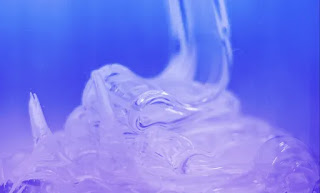
What is Silicone?

图片
I. Silicone Rubber ’s structure What is the organic silicone rubber: The basic structure of the organic silicon products unit is composed of a silicon-oxygen link,  and the side chain is connected by various kinds of organic silicone atoms and other groups. Therefore, in the structure of the organic silicone products containing both "organic groups", and "inorganic" structure, the special composition and molecular structure to make it combines the characteristics of organic matter and inorganic matter functions in one. And compared to other polymer materials, the most outstanding performances of organic silicone products include: (1) Heat resistance properties Organic silicone products are based on a silicon (Si) 0 oxygen key chain structure, the bond energy of the C - C key is 82.6 kcal/mol, while the bond energy of the Si - 0 key is 121 kcal/mol, silicone products own thermal stability. Under high temperature (or radiation exposure) molecular bonds will not break ...

What Causes The Silicone Tubing Burst?

图片
  The quality problem has always been a big problem in all industries. Silicone tubing can also face this problem. Sometimes in the process of our use, there will be a burst, which seriously affects the use effect, one part of the reason may be the reason for inferior products, of course, there are other reasons worth exploring, so what is the reason for the silicone tubing burst? Secondly, the reason for silicone tubing bursting is: The temperature of using stainless steel metal hose oil is too high. The silicone tubing is added to the double-roll rubber mixer or closed kneader with silicone rubber raw glue, and gradually added white carbon black, and other auxiliaries to repeatedly refined evenly, and the product is made by extrusion. When the hydraulic system is heated by power loss, coupled with the influence of external temperature, the oil temperature can rise sharply. The higher the oil temperature is, the easier the rubber is to age, the poorer the elasticity, the lower the...

What's The Difference Between Silicone and Silicone Rubber?

图片
  I. What is Silicone? As some chemistry books call it, "silicone" should be a condensation of silicon dioxide, with the formula mSiO2·H2O. "silicone" is a kind of highly active adsorption material, belongs to the amorphous substance, insoluble in water and any solvent, non-toxic and tasteless, stable chemical properties, in addition to strong alkali, hydrofluoric acid does not react with any substance. And we often say that nasal augmentation and breast enhancement filled with silicone is this kind of silicone. Inorganic silicone is a kind of highly active adsorption material, which is usually made by the reaction of sodium silicate and sulfuric acid, and a series of post-processing processes such as aging and acid bubble. Silicone is an amorphous substance, and its chemical formula is mSiO2. nH2O. Insoluble in water and any solvents, non-toxic and tasteless, stable chemical properties, except strong alkali, hydrofluoric acid does not react with any substance. Diff...